A safe that will not open is a specific kind of stuck. Passports, firearms, cash, a parent's estate paperwork, all of it sitting behind half an inch of steel that no longer answers to you. Safe opening is the core of what we do, and most safes in San Diego open cleaner and faster than their owners expect.
Here is the honest version of this trade. The large majority of locked safes never need a drill. They need someone who works on safe locks every day, knows what is bolted to the back of that door, and shows up with the right gear. When drilling really is the only way in, done properly it is one small, precise hole followed by a full repair, and the safe goes straight back into service.
Before you book a visit, spend five minutes on the owner-level checks. A fresh 9V battery in the keypad, the override key if your safe shipped with one, waiting out a penalty lockout, and dialing the combination exactly as written. Our locked out of a safe guide walks through each check in order. If the door still will not budge, call and we take it from there.
Why Safes Stop Opening
After enough openings you see the same handful of causes on repeat:
- Lost or forgotten combination. The number lived in one head or one notebook, and now it is gone. Common after a move, a divorce, or years of never locking the safe fully.
- Dead or failing electronic keypad. A flat 9V battery is the easy case. Worn keypad ribbons and failed circuit boards look identical from the outside but need real diagnosis.
- Inherited or estate safe. Dad's safe is in the garage and nobody ever knew the combination. If it is an older box, our antique safe work covers the vintage side of this.
- Jammed boltwork. A forced handle, a dropped safe, or a worn part leaves the bolts bound up even though the lock itself is fine.
- Right code, no open. You hear the beep, the motor whirs or clicks, the handle stays dead. Solenoid failure and penalty lockouts both look like this.
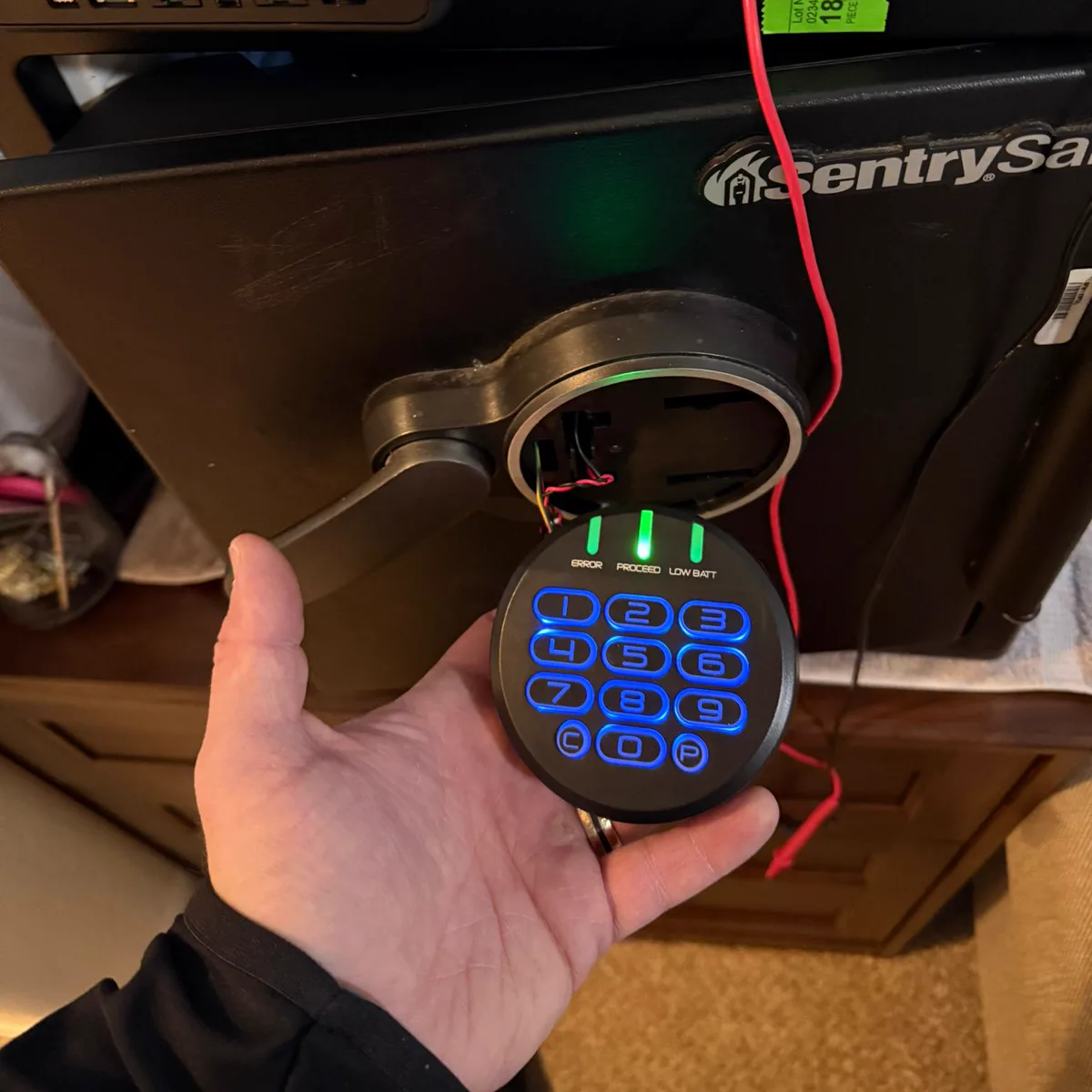
Electronic lock failures are the fastest growing slice of our work. The lock below came off a safe whose keypad had been fading for months before it quit completely.
Non-Destructive First, Every Time
Every job starts the same way. We verify your ID and proof of ownership, look at the safe, and pick the gentlest method that will actually work on that lock.
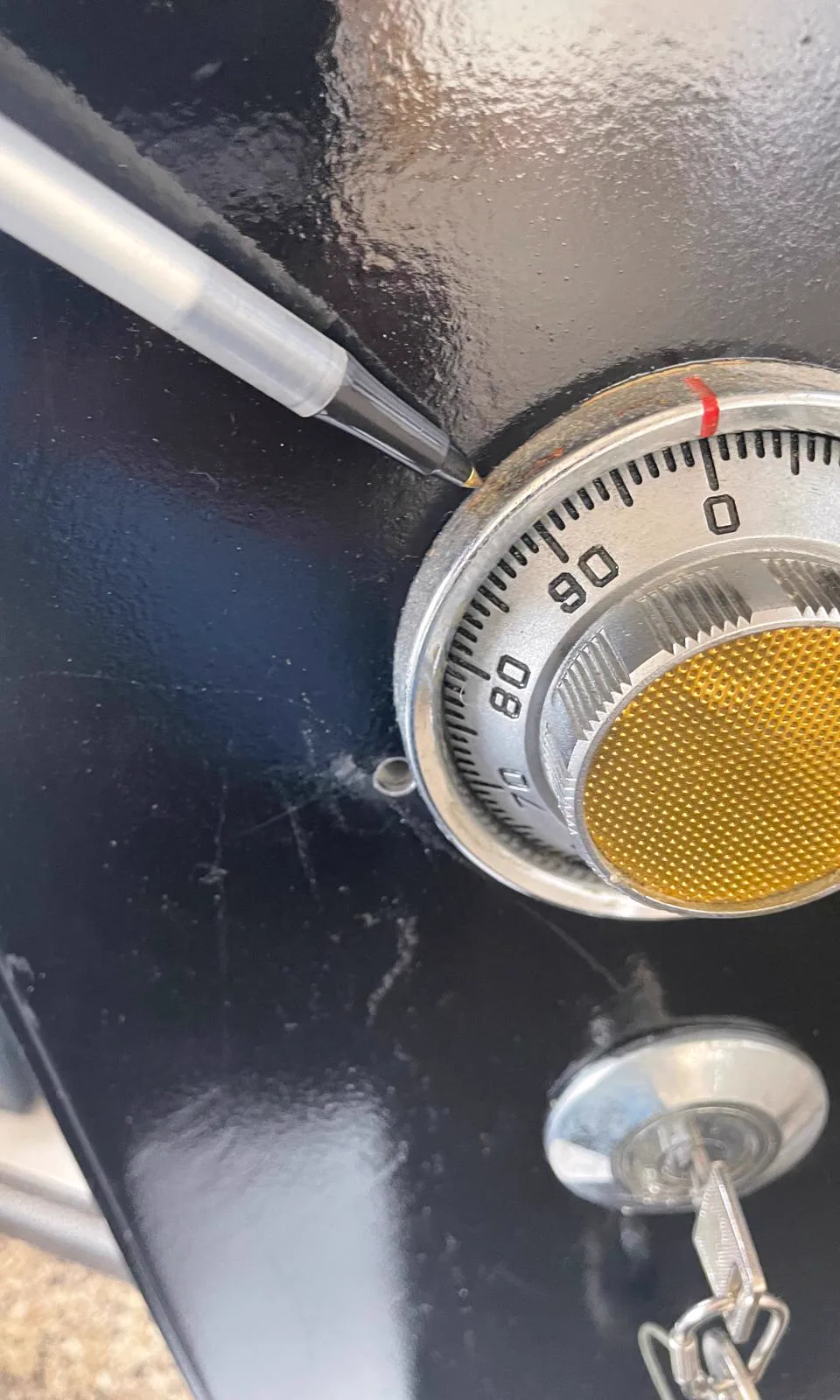
On mechanical dial locks that often means manipulation, which is opening the lock by dialing and reading the feedback it gives back. No drill, no marks, nothing to repair. It is slow, skilled work, and it is the reason a safe specialist is worth calling before anyone with a grinder. Where manipulation does not fit, decoding techniques and manufacturer procedures can often produce the combination another way.
On electronic locks we work through override and recovery procedures appropriate to that lock model. We will not publish the details here, and you should be suspicious of anyone who does, but the short version is that many electronic lockouts resolve without a single mark on the safe.
When Drilling Is Done Right
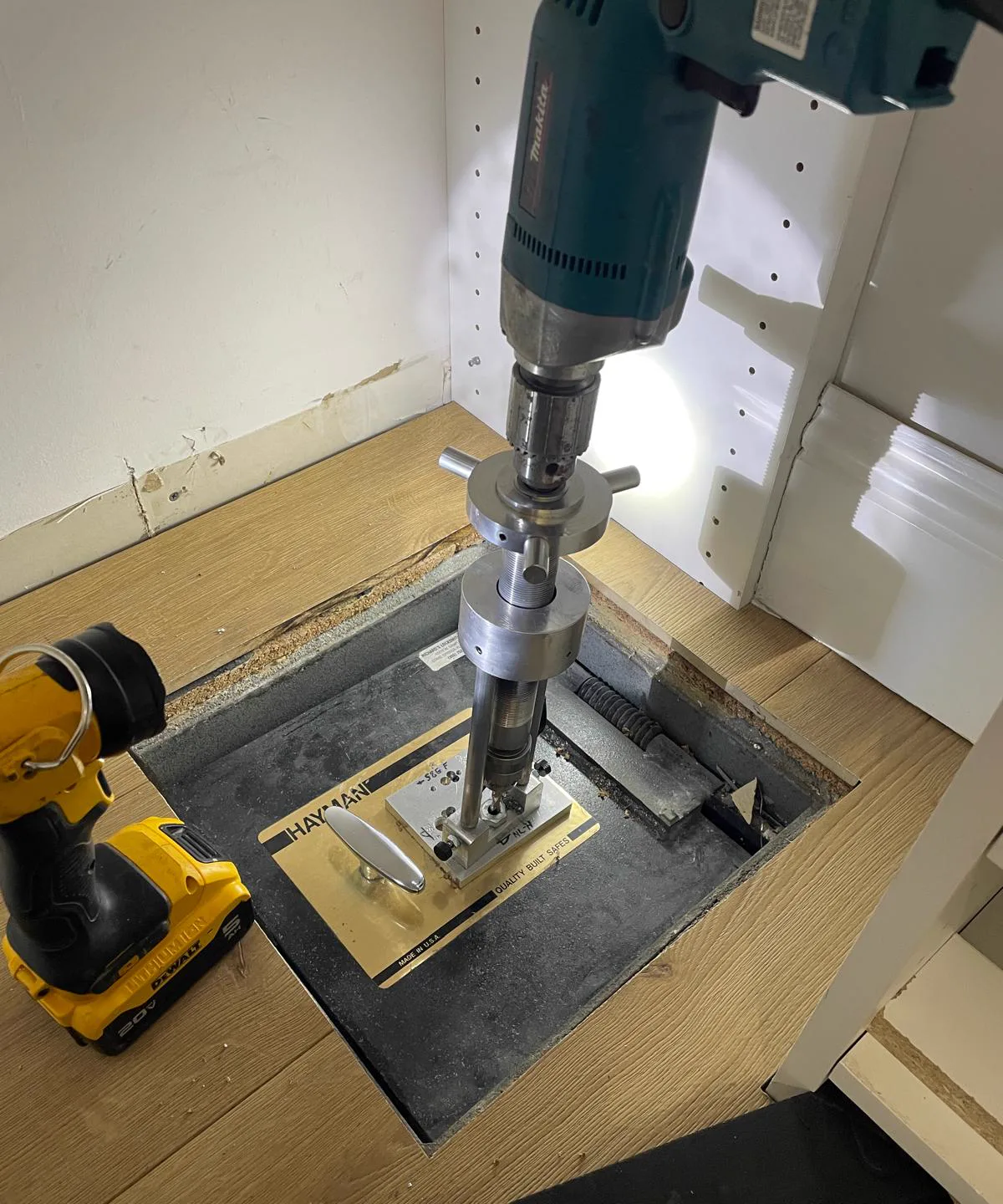
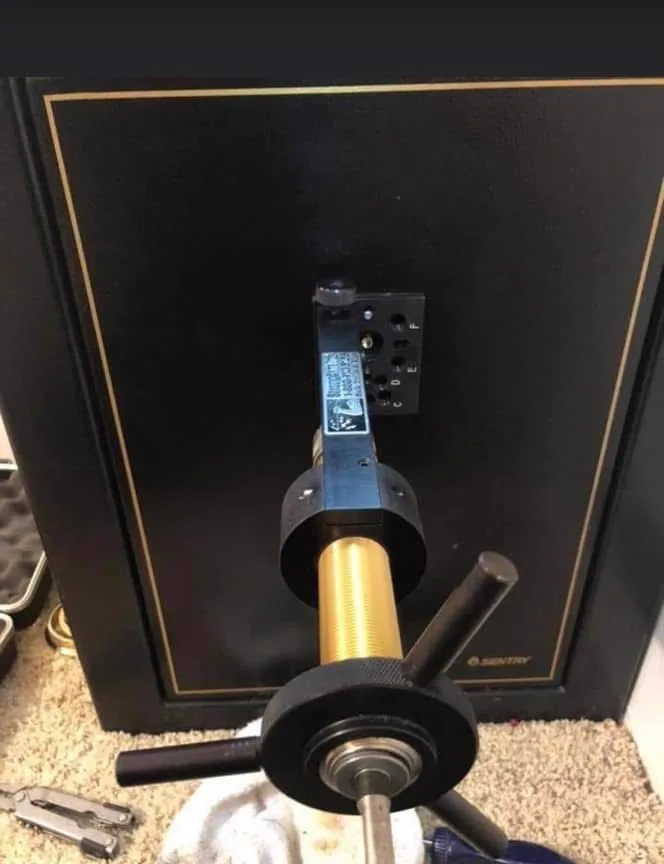
Some lockouts leave no other path. A seized boltwork, a failed lock body, a hardplate protecting everything worth reaching. Drilling is not a failure of skill, it is a tool, and the difference between a professional and a wrecker is what the drilling looks like.
Done right, it is one small hole in a calculated position, sized in millimeters, not inches. A borescope goes through the hole so we can see the mechanism and open the door with certainty instead of guesswork. Then comes the part the cheap outfits skip: the hole is repaired with a hardened plug, a new lock goes on the door, the boltwork is checked, and the finish is touched up. Our safe repair service handles that restoration as part of the same visit whenever possible, and if you want fresh numbers on the new lock we can set a new combination before we pack up. The safe stays a safe.
Looking for a Safe Cracking Service?
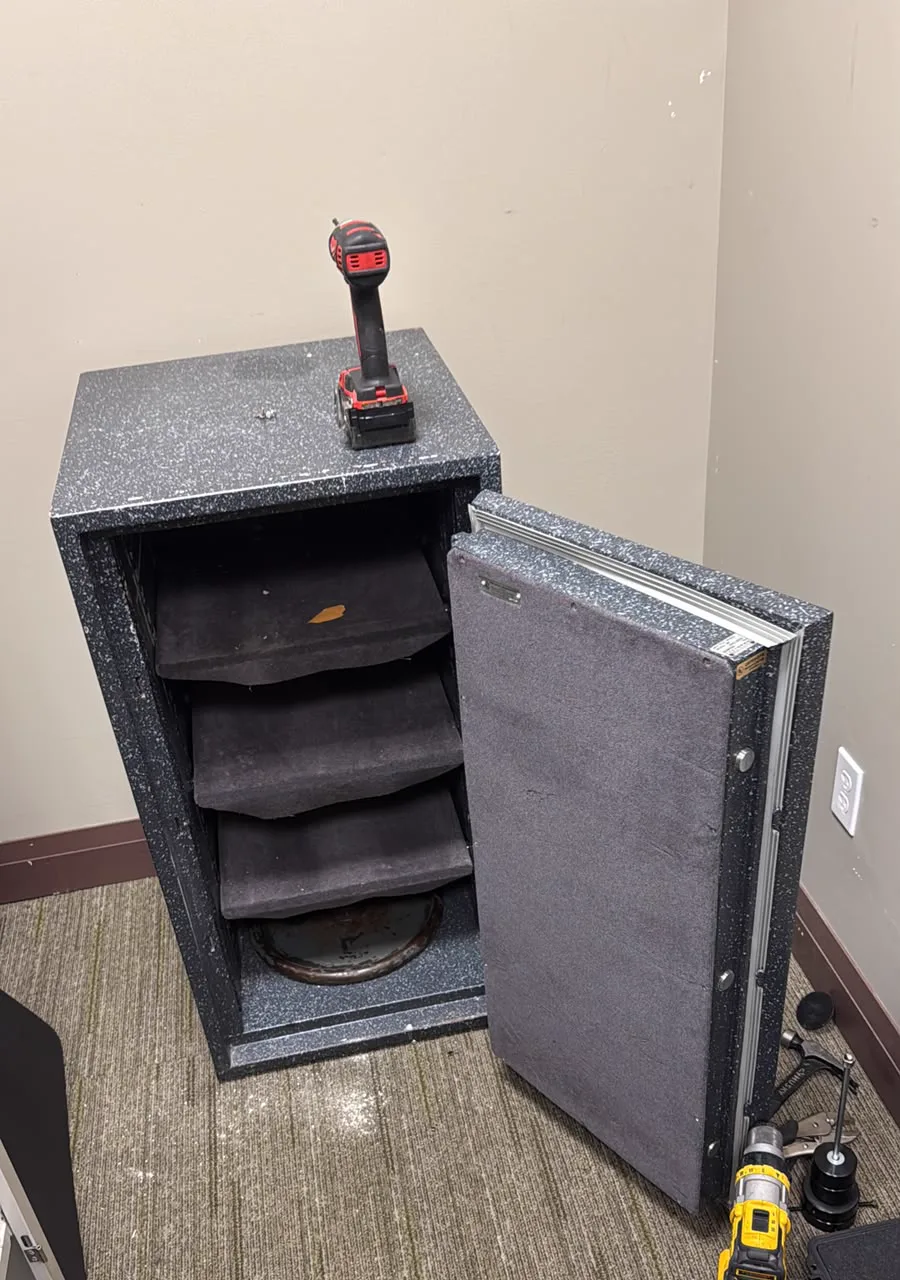
Plenty of people type "safe cracking service" into a search bar, and it is a fair phrase. Safe cracking, done legally, is exactly what we have described on this page: professional safe opening with ownership verified first. The movie version involves stethoscopes and stolen diamonds. The real version involves a borescope, a work light, and a customer standing next to us holding the paperwork.
A warning worth reading before you call anyone. Search results for safe opening are crowded with cookie-cutter websites run by phone banks that have no locksmith, no truck, and no address in San Diego. They quote a small number on the phone, subcontract the job to whoever answers, and the price triples once someone is standing in your garage. The tell is simple. A legitimate safe opener asks questions about your safe, gives you a realistic range up front, and requires ID and proof of ownership before touching the door. An outfit that will open any safe for anyone, no questions asked, should worry you for reasons beyond the bill.
What a Safe Opening Costs in San Diego
Exact pricing depends on the lock, the container, and what condition it is in, but you deserve real numbers before anyone rolls a truck. Most standard home safe openings run in the low hundreds. The table below shows typical ranges, and we confirm your exact price by phone before any work starts.
| Safe type | Typical range | Notes |
|---|---|---|
| Home fire safe (SentrySafe and similar) | $140 to $300 | Often opened in a single short visit |
| Gun safe (Liberty, Cannon, Winchester and similar) | $200 to $450 | Heavier doors, more lock variety |
| High-security or commercial safe (AMSEC, Gardall and similar) | $350 to $850 | Hardplates and relockers add time |
| Floor or wall safe | $250 to $600 | Access and body position drive the price |
If drilling turns out to be necessary, the repair and replacement lock are quoted alongside the opening, in plain numbers, before we start. No surprise line items at the door.
What to Have Ready When You Call
You do not need to know anything technical. But the more of this you have handy, the tighter our quote and the faster the visit:
- The brand and model, or at least the name on the door.
- The lock type. Spin dial, push-button keypad, key, or some combination.
- What happened. Lost combo, dead keypad, code accepted but handle stuck, and so on.
- A couple of photos of the door and the lock, texted to us, save everyone time.
- Where the safe sits. Garage floor, upstairs closet, bolted down or free-standing.
Safes are the whole business at Sam The Safe Locksmith, not a sideline to car keys and house locks. If yours is a gun safe, our dedicated gun safe locksmith page covers the extra wrinkles those doors bring. We run openings across the county, from La Jolla down to Chula Vista, Mon to Sat, 7am to 7pm. Call (619) 493-3195 and tell us what you are looking at.